STEM vs. STEAM: The Key Differences & Why the "A" Matters (2026 Guide)
If you have looked at a school curriculum or a toy aisle recently, you have definitely seen the acronyms. First, it was STEM. Then, seemingly overnight, an "A" appeared, and it became STEAM. For many parents and students, this looks like a marketing gimmick. Did they just add "Arts" to make math class less boring?
The short answer is no. The shift from STEM to STEAM represents a fundamental change in how we prepare students for the modern workforce. In an era where AI can write code and solve equations, the "A" might actually be the most important letter in the acronym. Here is the no-nonsense breakdown of the difference, why it matters, and which track is actually better for your future.
The Core Difference: It’s Not Just About "Art" Class
To understand the debate, we first need to define the terms without the fluff:
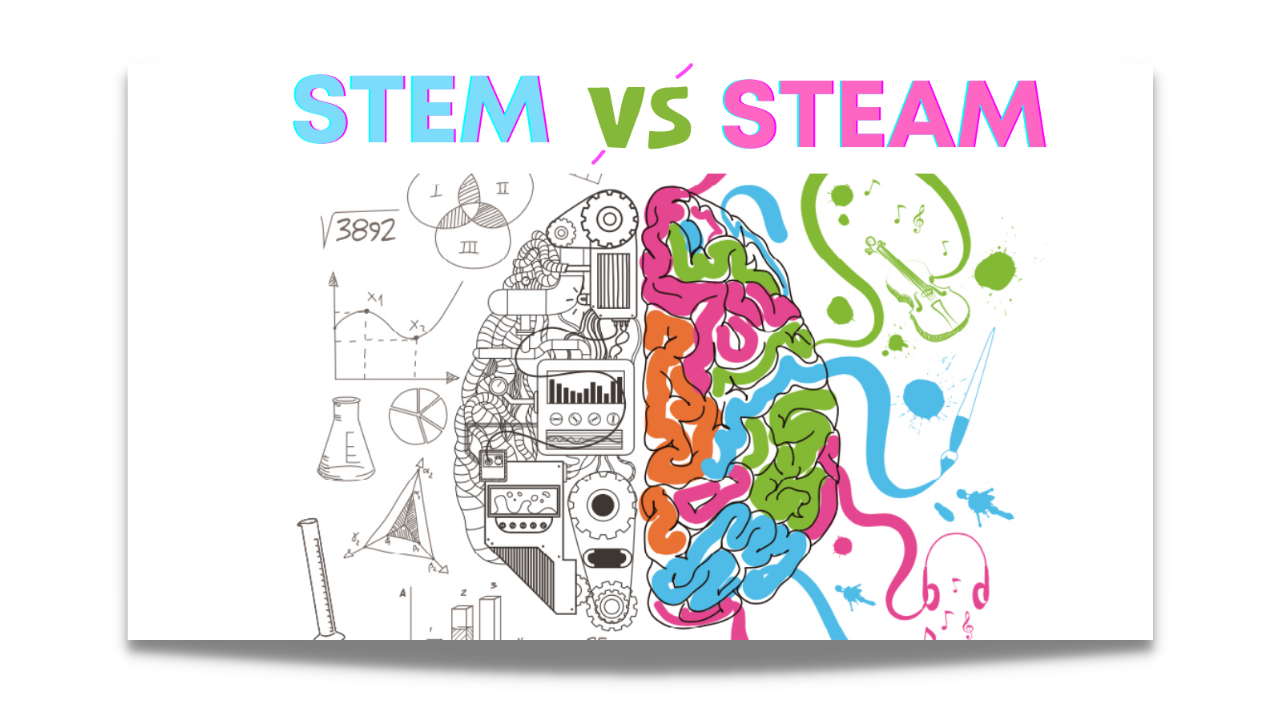
- STEM: Science, Technology, Engineering, Mathematics. Focuses on hard skills and solving problems through data and logic.
- STEAM: Science, Technology, Engineering, Arts, Mathematics. Wraps around STEM to include Humanities, Design, and New Media.
The Philosophies Compared
While STEM relies on the Scientific Method (Hypothesis -> Test -> Analysis), STEAM utilizes Design Thinking (Empathize -> Define -> Ideate -> Prototype -> Test). The goal of STEAM is to solve problems in a way that is innovative, user-friendly, and culturally relevant.
| Feature | STEM Education | STEAM Education |
|---|---|---|
| Primary Focus | Technical proficiency and accuracy. | Innovation and design application. |
| Key Question | "Is this solution correct?" | "Is this solution usable?" |
| Soft Skills | Critical thinking, analysis. | Empathy, communication. |

Future-Proofing for AI
This is the 2026 reality: Artificial Intelligence is getting incredibly good at pure STEM tasks. AI can calculate loads for a bridge or debug Python code in seconds. What AI cannot do easily is the STEAM part: understanding the cultural context or designing code to solve uniquely human emotional problems. The "A" is your insurance policy against automation.
Which Curriculum is Better for College Admissions?
The Case for STEM: The "Specialist" Route
If your goal is to be a neurosurgeon or a quantum physicist, pure STEM tracks are for the Specialists. Admissions for top-tier research universities want a transcript loaded with high-level Calculus, Physics, and Organic Chemistry.
The Case for STEAM: The "Holistic" Darling
Ivy League and elite Liberal Arts colleges are currently obsessed with the "well-rounded" or "T-shaped" student. They don’t just want a math genius; they want a math genius who understands ethics and can communicate complex ideas.

Career Paths: Logic Lords vs. Innovation Architects
Frequently Asked Questions
"The best strategy is to build a STEM foundation and apply a STEAM mindset. Be the engineer who can write a killer essay."
.jpg&w=3840&q=75)


.jpg&w=3840&q=75)