The emergence of AI essay writers has created a tricky ethical tightrope for students. While tools like ChatGPT and Jasper can dramatically speed up the writing process, their misuse can lead to severe academic penalties. The key is understanding exactly where the line between permitted assistance and academic misconduct lies.
This comprehensive guide explains how current AI detection tools work, provides ethical workflows for using AI responsibly, and details the steps you must take to ensure your college essays are not only compelling but also safe for submission.
Understanding AI Essay Writers and Academic Integrity
What is an AI essay writer and how is it used?
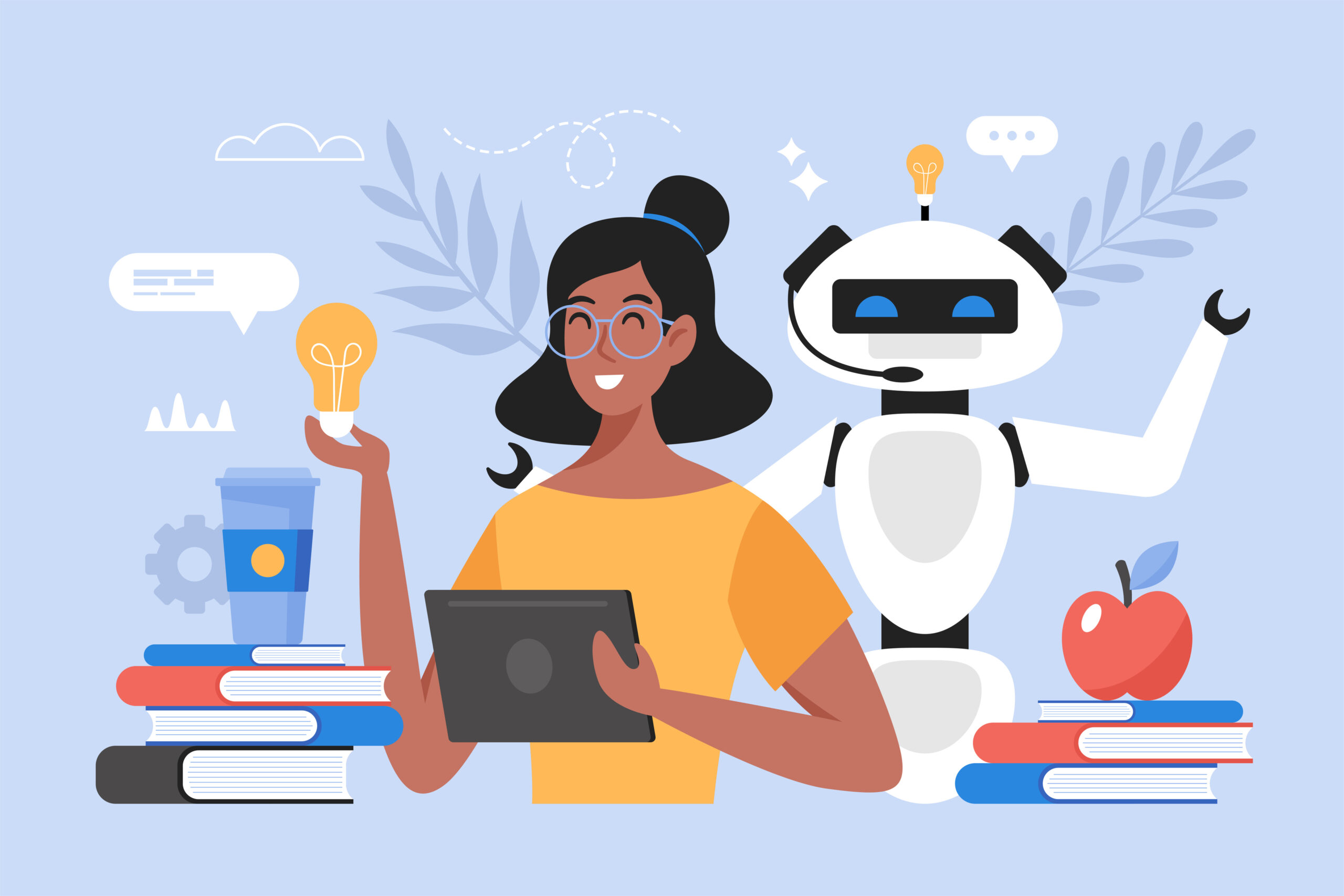
An AI essay writer is a generative AI model (like GPT-4) designed to produce human-like text based on a prompt. Ethically, they should only be used as thought partners for generating ideas, structuring outlines, and refining existing drafts. Using them to generate final submission text is almost universally considered cheating.
Academic integrity, plagiarism, and ethical considerations for AI essay writers
Plagiarism involves presenting someone else's work (including AI's) as your own without credit. While the legal status of AI text is debated, submitting AI output without disclosure violates academic integrity rules because it misrepresents the source of the intellectual effort. This is why tools with built-in safety features, like Orbit AI, are becoming crucial.
Institutional policies and disclosure best practices
The rule of thumb: your university policy trumps all. Before submitting any major paper, check your institution's specific guidelines. If assistance is permitted, disclosure should be clear and concise.
Disclosure Example
"Generative AI Assistance: The author used OpenAI's ChatGPT 4.0 for brainstorming the initial essay outline and refining the conclusion's language. All core arguments, research, and voice are the author’s own."
Common AI Essay Writers Compared (Free vs Paid)
Choosing the right tool is the first step toward safety. Tools built for academic use offer crucial features that general models do not.
AI Essay Writer Safety & Feature Comparison
| Feature | Orbit AI | Kolly.ai | ESAI.ai | ChatGPT | Jasper |
|---|---|---|---|---|---|
| U.S. Admissions Focus | ✅ | ❌ | ❌ | ❌ | ❌ |
| Humanize AI Tool | ✅ | ❌ | ❌ | ❌ | ❌ |
| Built-in AI Detector | ✅ | ❌ | ❌ | ❌ | ❌ |
| Safe for Turnitin | ✅ | ❌ | ❌ | ❌ | ❌ |
| Trusted by Students | ✅ | ❌ | ❌ | ❌ | ❌ |
Pricing, limits, and free-tier capabilities of top tools
When to choose a lightweight free AI essay writer vs. a paid option
Free tools like ChatGPT are suitable for rapid prototyping (outlines, summaries), but they lack academic safety nets. Paid, niche tools (like Orbit AI) justify their cost by offering crucial features like plagiarism checks, built-in AI detection, and citation support, minimizing your risk of academic penalties.
How AI Detection Tools Work (High-Level Overview)
Don't assume detectors are simply matching keywords. The technology is sophisticated, but it's not foolproof.
Types of detectors (statistical, ML classifiers, watermarking) and what they flag
- Statistical/ML Classifiers: These tools (including Turnitin) identify the predictable flow and vocabulary consistency characteristic of AI output.
- Watermarking: Future AI models may embed invisible, verifiable codes into generated text, making detection nearly instantaneous.
Accuracy, false positives, and limitations of AI essay detection
Current detectors are prone to false positives, especially with non-native speakers or technical writing. Never assume a "clean" score is a guarantee, nor assume a "flagged" score is a conviction. The ultimate judgment is made by a human reviewer.
Why detection is not the same as plagiarism detection
A high AI detection score means the language patterns resemble GPT. A high plagiarism score means the words match external sources. You must protect against both.
Responsible Ways to Use AI Essay Writers
When to use AI for brainstorming, outlining, and editing
- Brainstorming: Ask AI to generate 10 possible angles for your prompt.
- Outlining: Get a structure for a challenging format (e.g., "Outline a five-paragraph essay arguing against X").
- Editing: Use AI to check tone, syntax, or grammar on a human-written draft.
How to combine AI output with human revision and citations
If you use AI to generate text, you must treat it like a source: cite it. Every core idea and every sentence must pass through your intellectual filter, retaining your unique voice and adding value that AI cannot provide.
Disclosure examples and how to document AI assistance ethically
Always keep a log of your AI use (the prompt and the output date). This provides irrefutable evidence of your process if your essay is ever challenged.
Practical Workflows for Improving Your Writing with AI (Ethical)
Step-by-step: brainstorming → draft → human edit → cite → check plagiarism
- Prompting: Give the AI a highly specific, narrow prompt (Brainstorming).
- Drafting: Write the entire human draft based on the AI outline.
- Human Edit: Rewrite any overly generic or predictable sentences.
- Citing: Ensure all external sources are cited using tools, not the AI (see: AI resume builders often have this feature).
- Final Check: Run the essay through a plagiarism *and* an AI detection tool (like Orbit's built-in feature).
Tools to use alongside AI essay writers (plagiarism checkers, citation managers)
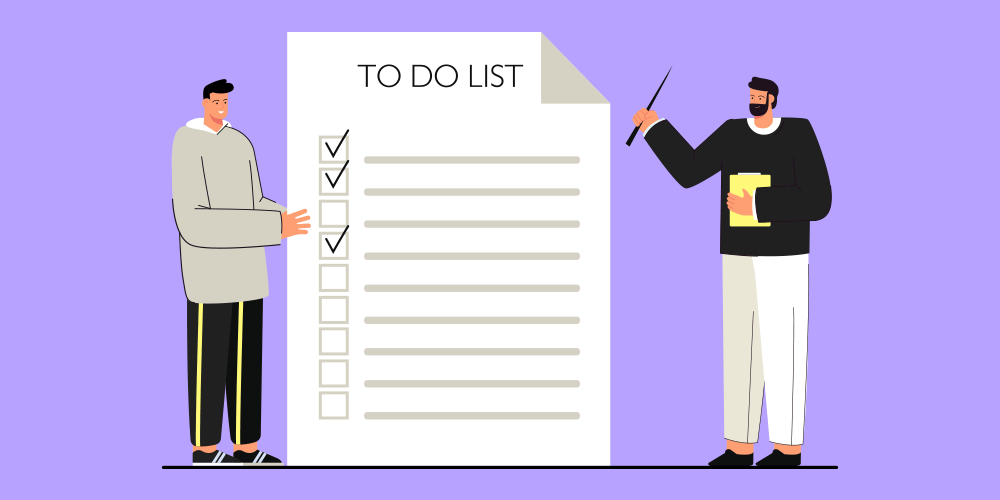
Quality control checklist before submission
Before you click submit, ask yourself:
- Does this essay sound like my authentic voice?
- Have I disclosed my AI use according to the professor/university policy?
- Are all sources verified and cited using a tool, not AI-generated citations?
- Did I run a dedicated plagiarism check?
- Did I run an AI detection check (and does my tool specialize in detecting its *own* output)?
Comparing Humanize/Paraphrase Features vs. Good Writing Practices
Why "humanizing" tools can create risk and when to avoid them
Tools that promise to "humanize" AI text often introduce choppy, unnatural phrasing to evade detection. They encourage the worst form of misconduct: generating text first and then attempting to trick the system. This often creates essays that read poorly and are still flagged.
Techniques to improve voice, clarity, and originality ethically
The best way to "humanize" is to write the content yourself. Focus on adding specific personal anecdotes, proprietary data, and complex sentence structures that reflect your unique, non-AI thought process.
Read More: Graduate Essay Guidance
If you are applying to graduate programs, understanding AI ethics in your statement of purpose is critical. Read our guide on GMAT vs GRE Guide to ensure your academic profile is ready for advanced admissions.
Frequently Asked Questions and Resources
1. What are the ethical rules for using an AI essay writer at my university?
Ethical rules vary widely. Most universities permit AI for brainstorming or editing but prohibit submitting AI-generated text as your own. Always check your institution's specific policy on AI disclosure.
2. Will my school detect that I used an AI essay writer?
Schools use various detectors (like Turnitin and GPTZero) that check for AI language patterns. While these tools are not 100% accurate and can have false positives, relying solely on AI for drafting poses a high risk of being flagged.
3. What’s the difference between AI detection and plagiarism detection?
Plagiarism detection checks if text matches existing sources (like websites or other student papers). AI detection checks if the statistical patterns of the text match those of an AI language model. They are separate academic integrity checks.
4. Should I disclose AI assistance on my essay, and how should I do it?
Yes, transparency is key. You should disclose AI assistance if permitted, typically in a footnote or a separate 'Methodology' section, stating clearly what the tool was used for (e.g., 'Outline generation using ChatGPT 4.0').
5. Which free AI essay writers are safe to use for brainstorming and editing?
Free tools like ChatGPT are suitable for brainstorming and outlining. For editing and grammar checks, Grammarly or Orbit's dedicated AI Editor are generally safer, as they focus on refinement rather than text generation.
6. How reliable are current AI essay detectors and what causes false positives?
Detectors have varying reliability. False positives are often caused by formulaic writing, highly technical language, or non-native English speakers who use simplified sentence structures that mimic AI patterns.
7. What steps should I take if my essay is flagged by an AI detector?
Immediately provide evidence of your human writing process (drafting history, tracked changes, previous human-written work). Transparency and evidence are your best defense.
8. Can using an AI writer affect copyright or ownership of my work?
Yes. Current U.S. Copyright Office guidance generally requires human authorship. If too much of your work is AI-generated, you may not be able to claim full copyright or ownership.
9. How can I use AI to improve my essay without violating academic policies?
Focus on using AI to check factual accuracy, improve clarity, refine citations (if the tool is capable), and identify gaps in your argument. Your personal voice and the central ideas must remain fully human-authored.
10. What tools should I combine with AI writers to ensure citation accuracy?
Always use established, dedicated citation managers (like Zotero or Mendeley) and plagiarism checkers (like Turnitin or Grammarly Premium), as AI writers are often unreliable for citing sources correctly.
11. Do AI essay writers provide proper citations and source verification?
No. Most AI essay writers hallucinate or misattribute sources. Never rely on AI for citation; you must verify every source yourself using standard academic tools and databases.
12. How do universities differentiate between permitted assistance and academic misconduct?
Universities look at the extent of assistance. Permitted use is usually for low-stakes tasks (grammar, formatting). Misconduct is defined as submitting AI-generated text as the student’s own intellectual product.

About the Author: Sayak Moulic
SEO & Growth Strategist
Sayak builds content experiences at Orbit that help our students learn about college application and financial literacy.

devanshdubey.nitd.cse@gmail.com
December 27, 2025
An experienced writer and researcher focused on college admissions, this author simplifies the complex journey of applying to universities. They create practical, student-friendly content on entrance exams, application strategies, essays, and admission planning. With a strong emphasis on clarity and real-world guidance, their work helps students and parents make informed decisions, avoid common mistakes, and confidently navigate competitive admissions processes to find the right academic fit.





.jpg)