When researching colleges, you see two key numbers: the Acceptance Rate (AR) and the Yield Rate (YR). While the acceptance rate tells you how hard it is to get in, the yield rate tells you how much a college is desired.
Understanding the interplay between these two metrics is essential for building a smart college list and making strategic application decisions, particularly regarding demonstrated interest and early application options.
What Is an Acceptance Rate?
The Acceptance Rate is the most widely publicized metric of selectivity. It is a straightforward measure of how many applicants were admitted out of the total pool.
Quick Definition
The percentage of total applicants who receive an offer of admission from a college or university.
How It’s Calculated
Acceptance Rate = (Total Number of Admitted Students) / (Total Number of Applicants)
Typical Ranges and What They Mean
An acceptance rate below 10% indicates hyper-selectivity (like the top colleges with the lowest acceptance rates). A rate between 20% and 40% is highly competitive, and anything above 50% generally means a strong regional school with moderate selectivity.
What Is a Yield Rate?
The Yield Rate is arguably the most important metric for a college's reputation and financial stability.
Quick Definition
The percentage of admitted students who choose to enroll, often called "matriculation rate."
How It’s Calculated
Yield Rate = (Total Number of Enrolled Students) / (Total Number of Admitted Students)
Typical Ranges and What They Mean
Elite universities (like the Ivy League) often have yield rates exceeding 70%—meaning 7 out of 10 admitted students choose to attend. A high yield rate signals prestige, desirability, and confidence in the institution's offerings.
Comparing Acceptance and Yield Rates: The Full Picture
To truly understand a college's standing, you must look at both figures simultaneously. A college that accepts 50% of applicants but has a 75% yield is arguably more desirable than a college that accepts 15% but has a 40% yield.
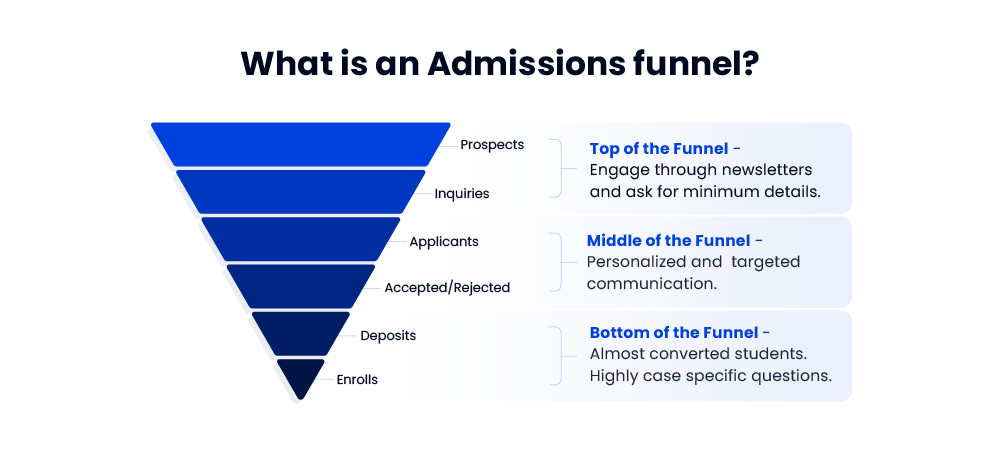
Why Acceptance Rate Can Be Misleading
Some less selective schools artificially lower their acceptance rate (making them look more competitive) by encouraging many applications—a practice known as "application padding." For instance, a university that receives many applications but has a low yield rate (say, 20%) is not as desired as its low acceptance rate might suggest.
Why Yield Rate Matters for Institutions
A high yield rate means predictable enrollment numbers, which translates directly to stable budget forecasting, efficient housing management, and less need for costly marketing campaigns. It reflects institutional prestige.
How They Together Tell a Complete Picture
The most prestigious schools combine a low acceptance rate (high exclusivity) with a high yield rate (high desirability). The most successful schools for students often have generous financial aid, which dramatically boosts their yield. See our guide on the best colleges for financial aid for related insights.
Acceptance Rate vs. Yield Rate Comparison for Top Schools
| Institution | Acceptance Rate (AR) | Yield Rate (YR) | AR vs YR Signal |
|---|---|---|---|
| Harvard University | ~3.2% | ~85% | Hyper-Selective & Highly Desired |
| Stanford University | ~3.7% | ~82% | Hyper-Selective & Highly Desired |
| UC Berkeley (Top CA University) | ~14% | ~42% | Highly Selective, but lower yield due to multiple California options |
| NYU (Example) | ~12% | ~45% | High Exclusivity, moderate Desirability |
Yield Rate’s Role in Rankings and Institutional Reputation
How Yield Influences College Rankings
Major publications (like U.S. News) historically include yield rate as a direct factor in their ranking methodology. A higher yield rate translates to a higher score in the "Selectivity" category, creating a powerful incentive for schools to prioritize students likely to enroll.
Potential Manipulation of Yield
To boost their ranking, colleges may employ strategies designed to influence yield:
- Aggressive Demonstrated Interest Tracking: Prioritizing applicants who have visited campus, opened every email, and attended virtual events.
- Enrollment Management: Using Early Decision (ED) programs heavily, as ED applicants have a near-100% yield rate.
- Waitlist Strategy: Accepting fewer students initially and managing the final enrollment count via the waitlist.
How Students Should Use These Metrics
These metrics are not just for colleges; they are powerful tools for applicants.
Building a Strategic College List
Use the acceptance rate to gauge the difficulty (reach, target, safety). Use the yield rate to gauge the college's confidence. If your top choice has a very high yield, you should take extra steps to show your dedication. For advice on building a strong list, check out: What is a Good College Acceptance Rate?
Applying Early Decision / Early Action
Applying Early Decision (ED) is the single greatest way to increase a college's yield rate and, consequently, your own admission chances. Because the college knows you will enroll if admitted, your value to their enrollment manager increases substantially.
Demonstrated Interest & Yield
If a college tracks demonstrated interest (and many do, especially those with competitive yield goals), actively engaging can move your application from the "admit, but probably won't commit" pile to the "admit, strong chance of commitment" pile. This is one of the clearest ways your personal actions can directly impact a college's yield goal.

Common Misconceptions & Frequently Asked Questions
Quick Q&A
1. How does a college’s yield rate affect my admission chances if I apply late?
Colleges aim to maintain a high yield rate. If you apply late in the cycle, the college may be more selective to ensure they don't over-enroll (or under-enroll), making admission more unpredictable than applying early decision/action.
2. Can a low acceptance rate guarantee a high yield rate?
No. Colleges like the University of Chicago and MIT have low acceptance rates but highly competitive yield rates. Conversely, some highly selective schools might have low yield rates if they are widely used as backups for the Ivy League.
3. What factors influence a student’s yield decision beyond acceptance rate?
The primary factors are financial aid competitiveness, the strength of the major program (see: TAMU Acceptance Rate by Major), and the overall campus culture and fit.
4. Are there any colleges that report yield rates separately for early decision applicants?
Most colleges do not officially report ED/EA yield rates, but they are internally tracked. ED yield is typically near 100%, and EA yield is typically higher than Regular Decision due to the applicant's demonstrated interest.
5. How do international students’ yield rates differ from domestic students?
International yield rates can be highly volatile due to changing visa policies, currency fluctuations, and varying financial aid availability (Scholarship search tools are vital here). Generally, yield is lower for international students unless the financial package is exceptional.
6. What is the impact of financial aid on a college’s yield rate?
Financial aid is the single biggest factor influencing yield. Generous, clear, and competitive financial aid packages (especially need-based grants) dramatically increase a college's yield rate, as students are more likely to commit.
7. How can I estimate my personal yield probability using available data?
Estimate your 'personal yield probability' by considering factors the college weighs: whether you applied ED/EA, participated in campus tours, emailed admissions, and whether the college meets 100% of demonstrated need.
8. Do colleges adjust their acceptance rates after observing yield trends?
Yes, indirectly. If a college observes a low yield trend, they will respond the following year by admitting more students (increasing the acceptance rate) to meet their enrollment target, or by focusing more aggressively on high-yield applicants (e.g., ED applicants).
9. What is the relationship between yield rate and student retention?
A high yield rate often correlates with a high retention rate (students who come back after the first year). This suggests admitted students who choose to enroll are genuinely committed and satisfied with the school.
10. How does yield rate factor into university ranking methodologies?
Yield rate is a core component of the "Selectivity" metric used by U.S. News and others. A higher yield rate translates directly to higher rankings, incentivizing colleges to improve this number.
11. Can a student’s demonstrated interest increase a college’s yield rate?
Yes. If a college tracks demonstrated interest, admitting a student who has visited, toured, and consistently engaged is a safer bet for enrollment, thereby increasing the yield rate.
12. Are there tools to compare acceptance and yield rates across similar schools?
Yes. Tools like Orbit's data platform or specialized search tools allow you to compare these metrics across various peer groups (e.g., Ivy League, small liberal arts colleges) to help you choose wisely.

About the Author: Sayak Moulic
SEO & Growth Strategist
Sayak builds content experiences at Orbit that help our students learn about college application and financial literacy.

devanshdubey.nitd.cse@gmail.com
December 27, 2025
An experienced writer and researcher focused on college admissions, this author simplifies the complex journey of applying to universities. They create practical, student-friendly content on entrance exams, application strategies, essays, and admission planning. With a strong emphasis on clarity and real-world guidance, their work helps students and parents make informed decisions, avoid common mistakes, and confidently navigate competitive admissions processes to find the right academic fit.






.jpg)